Werken / Works
(Scroll down for our English version)
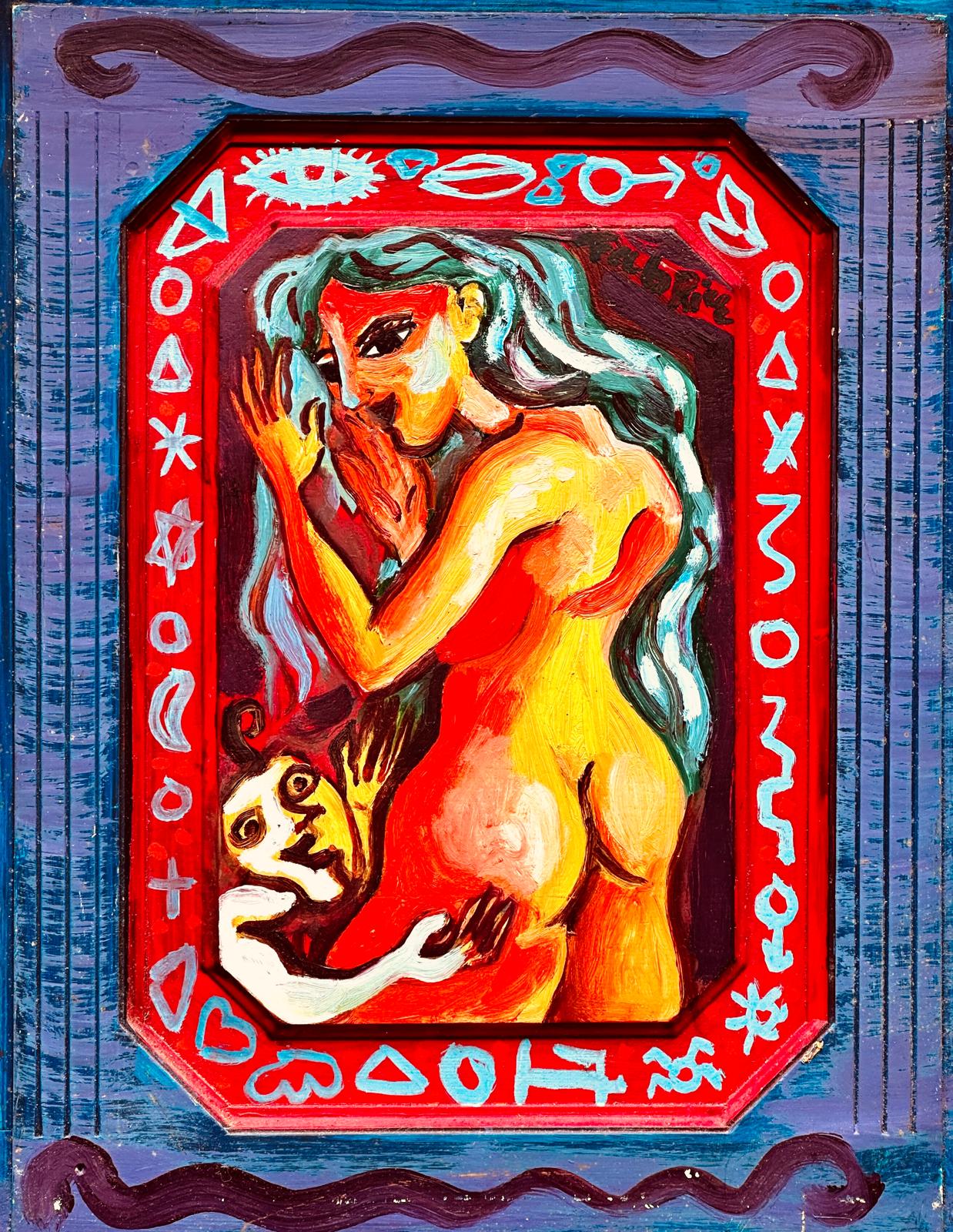
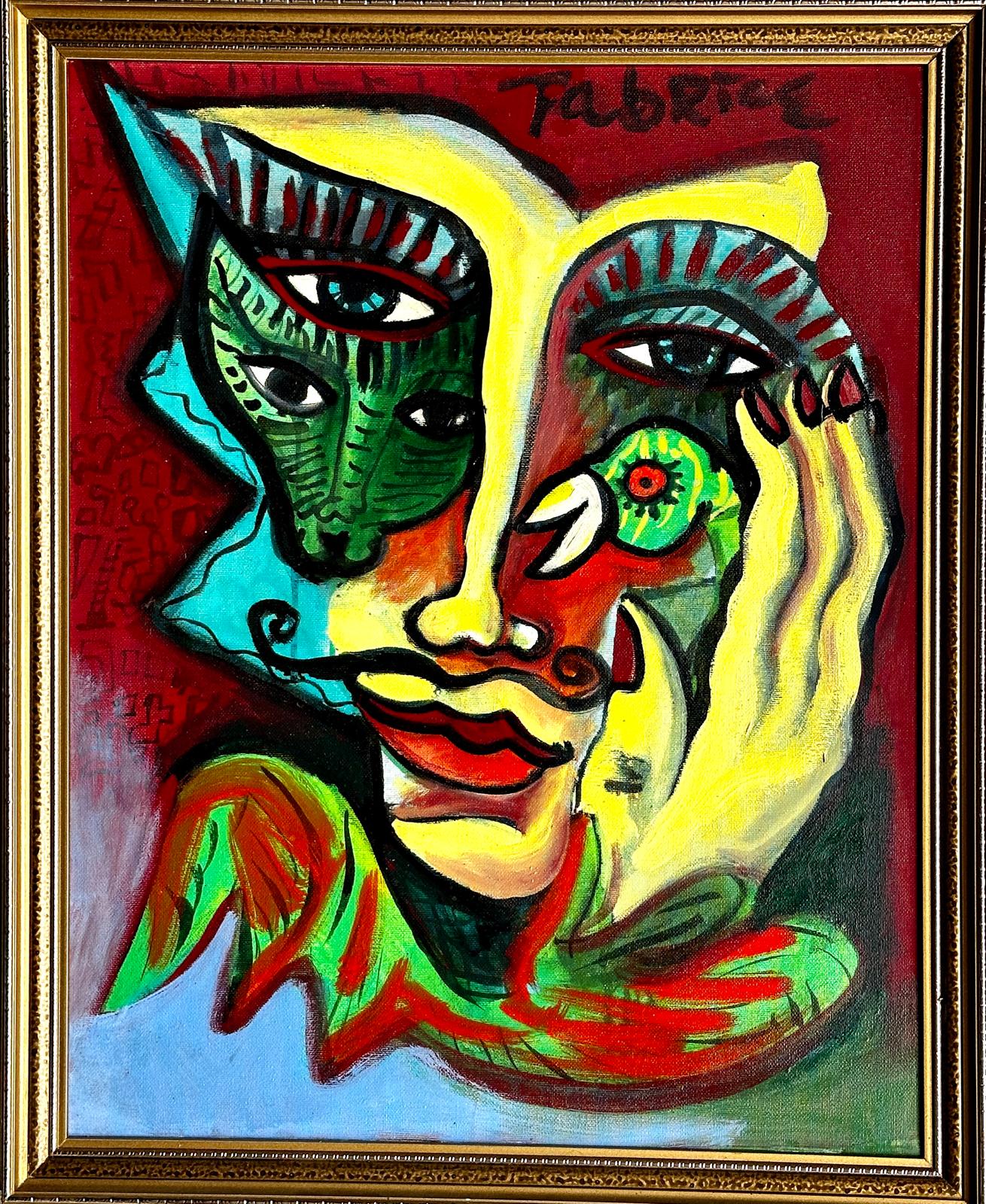
Op 31 december 2021 overleed de Amsterdamse kunstenaar Fabrice Hünd. Naast een groot oeuvre aan schilderijen en tekeningen liet hij verspreid door Amsterdam zeven monumentale mega-mozaïeken achter, kleurrijkewerken die in de loop der jaren onderdeel zijn geworden van het straatbeeld enhet geheugen van verschillende buurten in de stad.
Hoewel Fabrice in de eerste plaats schilder was, groeidenjuist deze mozaïeken uit tot herkenbare ontmoetingspunten voor buurtbewoners,passanten en bezoekers. De werken ontstonden vaak vanuit eigen initiatief,vanuit liefde voor de stad en vanuit een sterke behoefte om kleur, fantasie en verbinding toe te voegen aan de openbare ruimte.
Fabrice werkte veel met glas, keramiek, natuursteen en gevonden materialen uit de stad zelf, een werkwijze die hij omschreef als “schilderen met scherven”. Tijdens het maken van de mozaïeken raakten buurtbewoners regelmatig betrokken. Mensen brachten materiaal langs, bleven kijken, hielpen mee of raakten simpelweg in gesprek. Hierdoor kregen de werken niet alleen een artistieke, maar ook een sociale en historische betekenis.
Hieronder volgt een kort overzicht van de gerealiseerdemega-mozaïeken in Amsterdam.
Het Kompas (2006)
Locatie: Marie Heinekenplein, Amsterdam
Het Kompas ontstond op initiatief van Fabrice Hünd en kwammede tot stand in samenwerking met, en met financiering van, deeigenarenvereniging van het omliggende appartementencomplex. Het werk bevindt zich op een rond gebouw midden op het Marie Heinekenplein en verbeeldt de vier windstreken. Door zijn centrale ligging enopvallende vorm groeide het mozaïek uit tot een herkenbaar onderdeel van het plein en de directe omgeving.
Scherven van Beschaving (2010)
Locatie: Muiderpoortstation, hoek Pontanusstraat/Wijttenbachstraat, Amsterdam
Dit werk werd volledig op initiatief van Fabrice gerealiseerd en door hemzelf gefinancierd. Het mozaïek verwijst naar de culturele diversiteit van Amsterdam-Oost en toont invloeden uit verschillende culturen en beschavingen. Het werd aangebracht op een bestaand tegelplateau waarop Fabrice in 1993 al een schildering maakte als onderdeel van het grotere project Fluorescerende Sporenelementen, in de onderdoorgang van station Muiderpoort. Het mozaïek vormt daarmee zowel een artistieke voortzettingals een tastbare herinnering aan een eerder verdwenen stadsproject. Het werk is opgenomen in de collectie van hetStadscuratorium.
Hoofdzaakliefde (2011)
Locatie: Hoofddorpplein, Amsterdam
Dit mozaïek werd gerealiseerd op initiatief van Fabrice Hünd, met toestemming van Liander. In overleg met Fabrice werd het werk later verwijderd vanwege de vervanging van het transformatorhuis waarop het was aangebracht. Het mozaïek is destijds zorgvuldig in delen verwijderd en kan in principe opnieuw geplaatst worden. Aan dit project werd ook een mozaïekworkshop gekoppeld, waarbij buurtbewoners actief deelnamen aan het maakproces.
In den Bescherfden Schuyt (2012)
Locatie: Cornelis Schuytstraat / Willemsparkweg,Amsterdam
Dit werk kwam tot stand op initiatief van Fabrice, insamenwerking met Liander, eigenaar van het transformatorhuis waarop het mozaïek werd aangebracht. De financiering werd mede mogelijk gemaakt door bijdragen van onder andere de winkeliersvereniging, Goede Doelen Loterijen, Rabobank, Stichting Kattendijke/Drucker en verschillende bedrijven en particuliere donateurs. Bovenaan het werk zijn koperen naamplaatjes aangebracht met de namen van sponsoren en donateurs, als blijvende herinnering aan hun betrokkenheid. Water, boten en zeedieren spelen een centrale rol in hetwerk, als verwijzing naar de naam Cornelis Schuyt. Het maakproces werd gedocumenteerd door filmmaker Marlijn Franken. In de loop der jaren groeide het werk uit tot een geliefd herkenningspunt binnen Amsterdam-Zuid.
Agua Costa(2013)
Locatie: Da Costakade 200, Amsterdam
Agua Costa werd gerealiseerd in opdracht van Badhuis DaCosta, ter gelegenheid van het honderdjarig bestaan van het badhuis in zijn huidige vorm.
Het mozaïek toont badende figuren in een spel van water, stoom en beweging. De financiering kwam tot stand dankzij bijdragen van Badhuis Da Costa, het Amsterdams Fonds voor de Kunst (AFK) en Stadsdeel West. Het badhuis is het enige sociale badhuis in Nederland dat nog altijd als zodanig functioneert, waardoor het werk ook verbonden is aan eenbelangrijk sociaal-historisch onderdeel van de stad.
Nijntje (2017)
Locatie: Paulus Potterstraat, Amsterdam
Dit mozaïek werd gerealiseerd in opdracht van, en gefinancierd door, Coster Diamonds. Het werk toont Nijntje als glinsterende figuur in mozaïekvorm en werd geplaatst op een verhoogde sokkel, zodat bezoekers zichnaast het werk kunnen laten fotograferen. Door de ligging nabij het Museumplein groeide het uit tot een veel gefotografeerd object voor zowel bewoners alsbezoekers van de stad.
Circus (2021)
Locatie: Eerste Jan van der Heijdenstraat, Amsterdam
Circus werd gerealiseerd in opdracht van openbare basisschool Oscar Carré, ter gelegenheid van het 25-jarig bestaan van de school. Het mozaïek bestaat uit acht panelen op het hek voor de school en toont een kleurrijke wereld van circustenten, acrobaten, dieren en clowns. Het ontwerp kwam tot stand naar aanleiding van tekeningen die werden gemaakt door ongeveer 350 leerlingen van de school. Hiermee vormt het werk niet alleen een kunstwerk in de openbare ruimte, maar ook een blijvende herinnering aan een gezamenlijk creatief proces binnen de buurt en de schoolgemeenschap.
Culturele en maatschappelijke betekenis
De mega-mozaïeken van Fabrice Hünd zijn in de afgelopenjaren uitgegroeid tot herkenbare onderdelen van het Amsterdamse straatbeeld. Zij verbinden kunst met architectuur, buurtgeschiedenis en dagelijks leven, en worden dagelijks gezien door duizenden bewoners en bezoekers van de stad. De werken vertegenwoordigen een zeldzaam voorbeeld van monumentale mozaïekkunst in de openbare ruimte, waarbij niet alleen artistiekekwaliteit centraal staat, maar ook toegankelijkheid, participatie en sociale verbondenheid. Op de gemeentelijke website “Buitenkunst” wordt reeds melding gemaakt van verschillende werken van Fabrice Hünd, waaronder: Het Kompas, Agua Costa, In den Bescherfden Schuyt, Scherven van Beschaving
Daarnaast verscheen in 2017 het boek Fabrice Hünd, over zijn leven en werk. In 2025 verscheen, ter gelegenheid van het 750-jarig bestaanvan Amsterdam, het boek Amsterdam Diaries, Life Writing and Identity (UrbanLives). Hierin is hetessay opgenomen:
“The Mega-Mosaics of Fabrice Hünd: Life Writing in Shards of Amsterdam”(blz. 253). Dit essay behandelt het ontstaan van de mega-mozaïeken enhun betekenis binnen de geschiedenis en identiteit van Amsterdam.
ENGLISH:
oOn 31 December 2021, the Amsterdam artist Fabrice Hünd passed away. Alongside a large body of paintings and drawings, he left behind seven monumental mega-mosaics throughout Amsterdam, colourful works that over the years have become part of the streetscape and collective memory of several neighbourhoods in the city.
Although Fabrice was first and foremost a painter, these mosaics gradually grew into recognisable meeting points for local residents, passers-by and visitors. Many of the works originated from his own initiative, driven by a deep love for the city and a strong desire to bring colour, imagination and connection into public space. Fabrice often worked with glass, ceramics, natural stone and found materials collected from the city itself, a working method he described as “painting with shards.” During the creation of the mosaics, local residents regularly became involved. People brought materials, stopped to watch, helped with the process or simply started conversations. As a result, the works gained not only artistic value, but also social and historical significance.Below is an overview of the realised mega-mosaics in Amsterdam.
Het Kompas (2006)
Location: Marie Heinekenplein, Amsterdam
Het Kompas was initiated by Fabrice Hünd and realised in collaboration with, and partly financed by, the owners’ association of the surrounding apartment complex.The work is situated on a round building in the centre of the Marie Heinekenplein and represents the four cardinal directions. Due to its central location and distinctive form, the mosaic became a recognisable landmark within the square and surrounding area.
Scherven van Beschaving / Shards of Civilization (2010)
Location: Muiderpoort Station, corner of Pontanusstraat/Wijttenbachstraat, Amsterdam
This work was entirely initiated and financed by Fabrice himself. The mosaic refers to the cultural diversity of Amsterdam-East and incorporates influences from various cultures and civilizations. It was installed on an existing tiled platform where Fabrice had already created a mural in 1993 as part of the larger project Fluorescent Trace Elements, located in the underpass of Muiderpoort Station.The mosaic therefore forms both an artistic continuation and a tangible reminder of an earlier urban artwork that no longer exists.The work has been included in the collection of the Stadscuratorium.
Hoofdzaakliefde (2011)
Location: Hoofddorpplein, Amsterdam
This mosaic was realised on the initiative of Fabrice Hünd, with permission from Liander.In consultation with Fabrice, the work was later removed due to the replacement of the transformer building on which it had been installed. The mosaic was carefully dismantled in sections and could, in principle, be reinstalled.A mosaic workshop was also connected to this project, in which local residents enthusiastically participated.
In den Bescherfden Schuyt (2012)
Location: Cornelis Schuytstraat / Willemsparkweg, Amsterdam
This work was initiated by Fabrice in collaboration with Liander, owner of the transformer building on which the mosaic was installed.The project was partly financed through contributions from the local shopkeepers’ association, Goede Doelen Loterijen, Rabobank, Stichting Kattendijke/Drucker, as well as various companies and private donors. Copper plaques bearing the names of sponsors and donors were installed at the top of the mosaic as a lasting tribute to their involvement.Water, boats and sea creatures play a central role in the work, referring to the name Cornelis Schuyt. The creation process was documented by filmmaker Marlijn Franken.Over the years, the mosaic has grown into a beloved landmark within Amsterdam South.
Agua Costa (2013)
Location: Da Costakade 200, Amsterdam
Agua Costa was commissioned by Badhuis Da Costa to celebrate the hundredth anniversary of the bathhouse in its current form.The mosaic depicts bathing figures surrounded by water, steam and movement. Funding was provided through contributions from Badhuis Da Costa, the Amsterdam Fund for the Arts (AFK) and Amsterdam West district.The bathhouse is the only remaining social bathhouse in the Netherlands still functioning in its original social role, which also connects the work to an important social and historical aspect of the city.
Nijntje (2017)
Location: Paulus Potterstraat, Amsterdam
This mosaic was commissioned and financed by Coster Diamonds.The work depicts Nijntje (Miffy) as a shimmering mosaic figure and was placed on an elevated pedestal, allowing visitors to pose and take photographs beside it. Due to its location near Museumplein, it has become a frequently photographed object for both residents and visitors.
Circus (2021)
Location: Eerste Jan van der Heijdenstraat, AmsterdamCircus was commissioned by public primary school Oscar Carré to celebrate the school’s 25th anniversary.The mosaic consists of eight panels placed on the fence in front of the school and depicts a colourful world of circus tents, acrobats, animals and clowns. The visual concept was developed from drawings made by approximately 350 students from the school.The work therefore represents not only a public artwork, but also a lasting memory of a collective creative process within the neighbourhood and school community.Cultural and social significanceOver the years, the mega-mosaics of Fabrice Hünd have become recognisable elements of Amsterdam’s urban landscape. They connect art with architecture, neighbourhood history and daily life, and are seen every day by thousands of residents and visitors throughout the city.The works represent a rare example of monumental mosaic art in public space, where artistic quality is combined with accessibility, participation and social connection.Several of the works are already referenced on the municipality’s public art platform “Buitenkunst,” including:
• Het Kompas
• Agua Costa
• In den Bescherfden Schuyt
• Scherven van Beschaving
In 2017, the book Fabrice Hünd was published, focusing on his life and work.In 2025, as part of the celebrations surrounding the 750th anniversary of Amsterdam, the book Amsterdam Diaries, Life Writing and Identity (Urban Lives) was published. It includes the essay:
“The Mega-Mosaics of Fabrice Hünd: Life Writing in Shards of Amsterdam” (p. 253).The essay discusses the origins of the mega-mosaics and their significance within the history and identity of Amsterdam.